Viscri 9 The Saxonalist · a data project
Tile, Tin, Grass
The villages time has saved — and the ones it is erasing
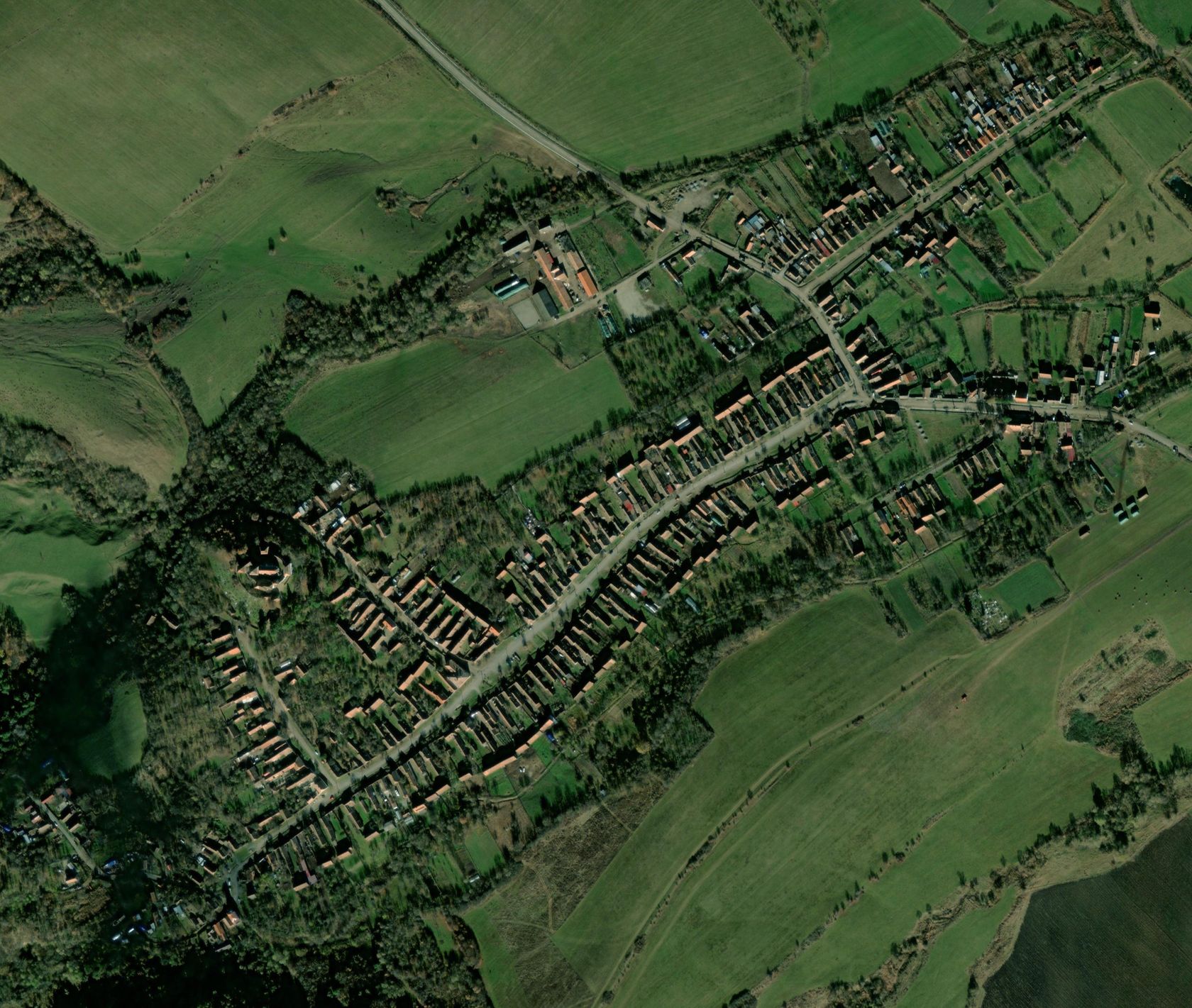
Roof by roof, we judged 27 Saxon villages in Transylvania, on satellite imagery and two decades of aerial archives. Three materials, three fates: what endured, what changed in order to live, and what left nothing behind but grass.
Bogdan Pencea · July 2026
scroll ↓
Two erosions, two fates. The Saxon villages do not die the same way. Some are eaten by prosperity: they stay inhabited but lose their substance — tile gives way to tin, house by house, precisely in the villages with a healthy economy. Others keep their substance almost intact and lose everything instead: in Richiș and in Dacia, old tile dominates whatever remains — it is just that less and less remains.
Between these two erosions stand the exceptions that prove the rule: Viscri, saved by the fame of a king, and Mălâncrav, adopted by a foundation. The data points to an uncomfortable conclusion: villages do not survive because they are beautiful. They survive because they are known.
We put this thesis to the test, with numbers: each village’s notoriety — twelve months of views of its Wikipedia articles — set against the two axes. On material, the verdict is blunt: notoriety does not matter at all. On abandonment, the sign is the expected one — the better-known half of the list averages 1.8% of buildings confirmed gone, the obscure half 2.6%, and all four villages with a ruination profile sit in the obscure half. But across 27 villages the difference stays below the threshold of statistical significance. The thesis remains what it was: a hypothesis — suggested by the data, not yet proven by it.
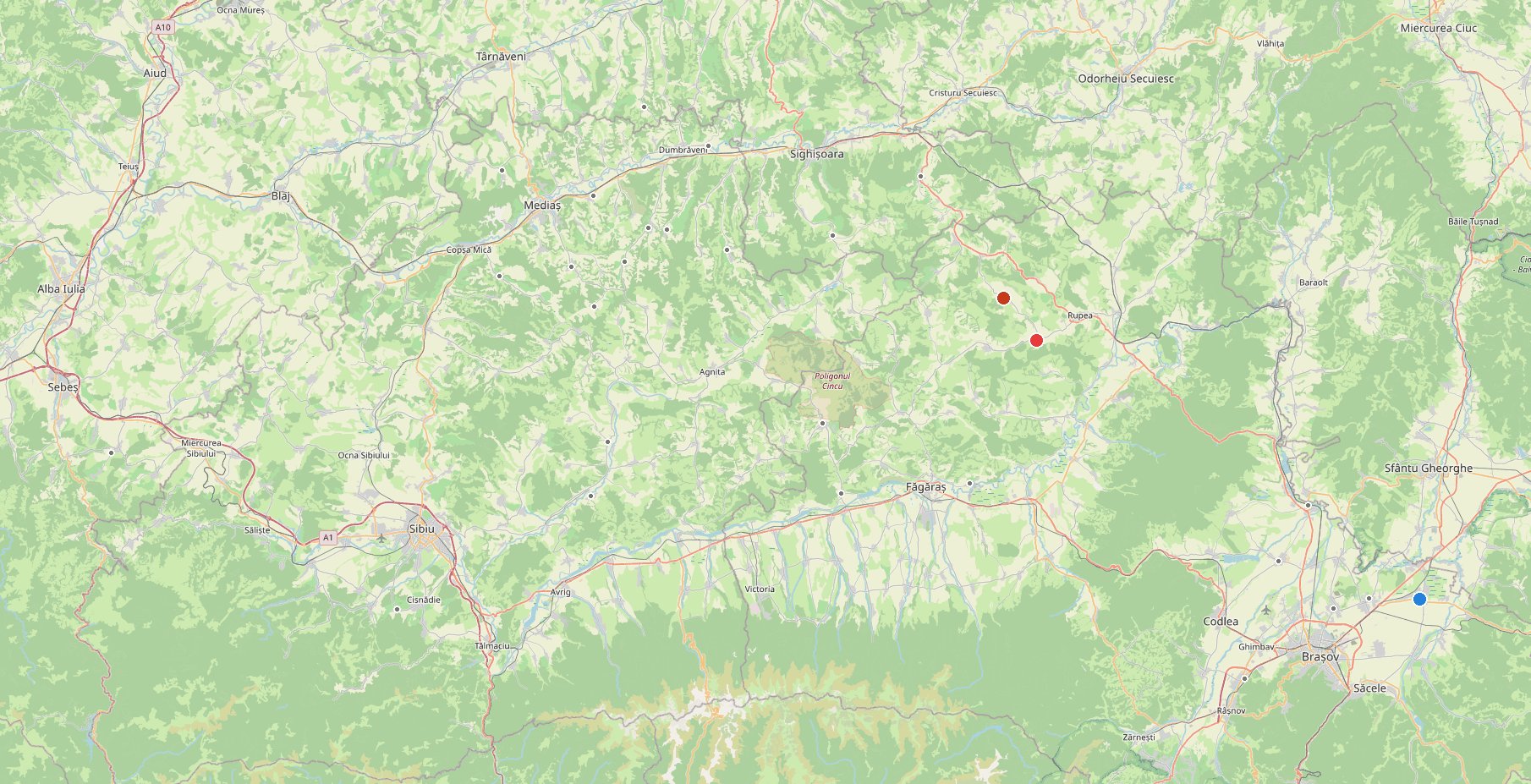
With all 27 villages measured and human-verified, the first erosion acquires a geography: five of the six villages with the least tile — Feldioara (68%), Hărman (72%), Sânpetru (73%), Cristian (76%) and Hălchiu (78%) — sit in the commuter belt of Brașov. The most economically alive villages are precisely the ones losing their substance fastest.
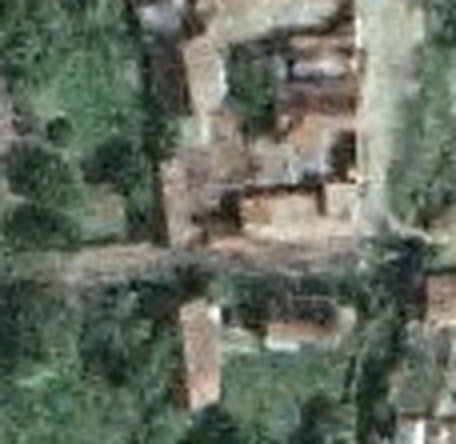
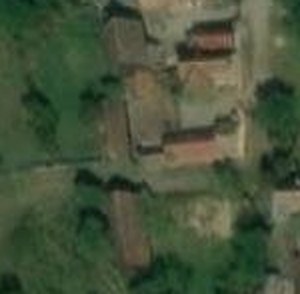
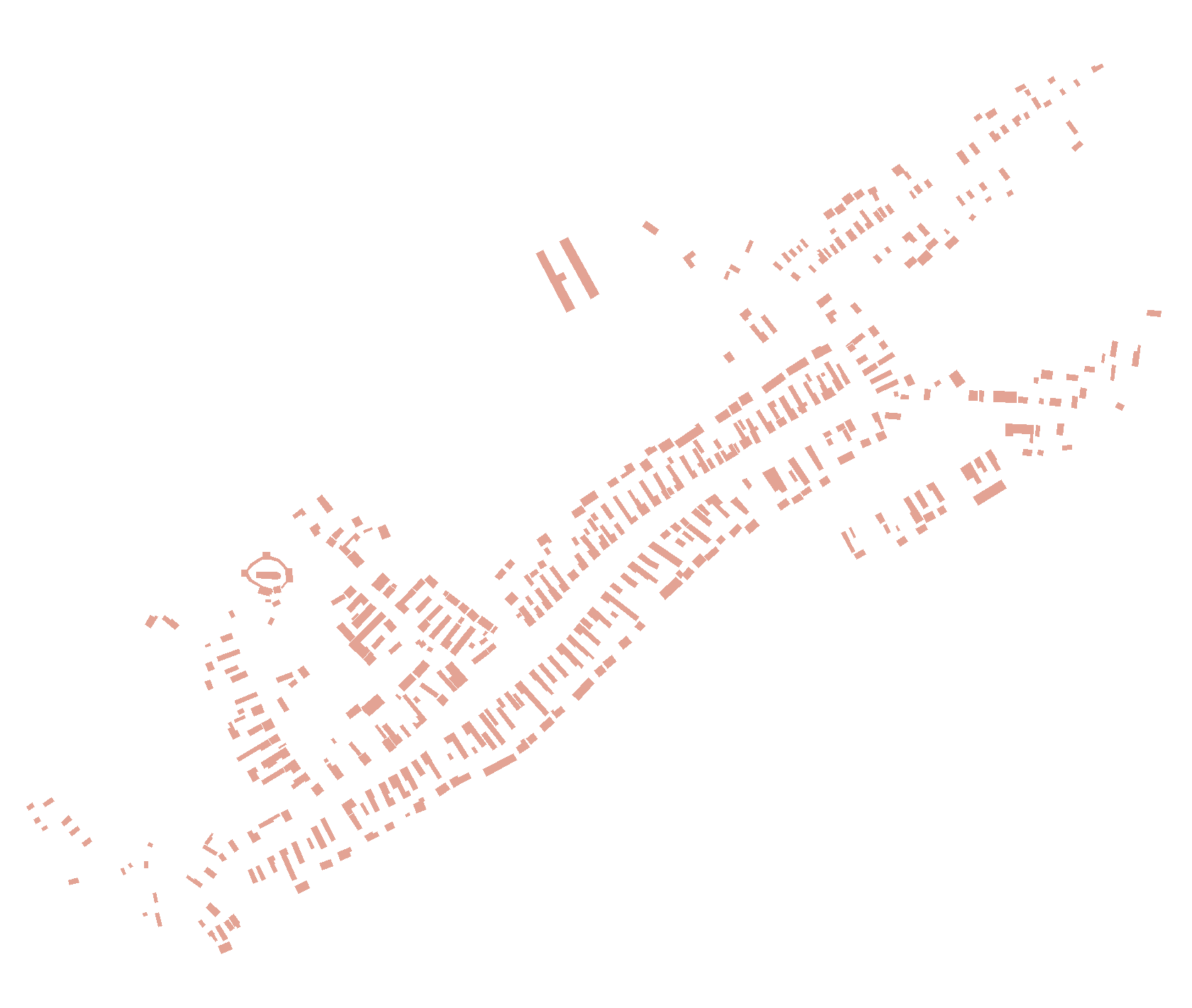
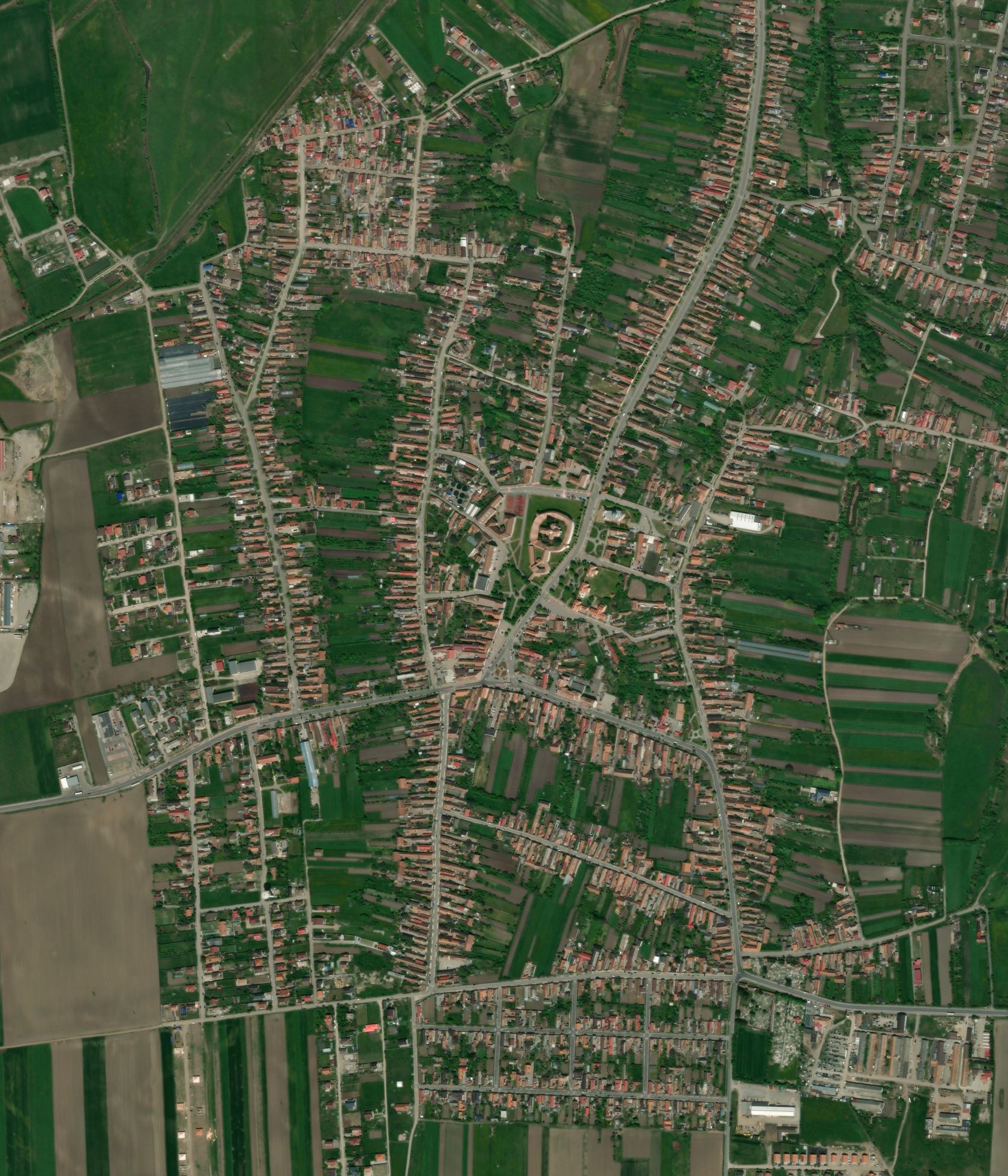
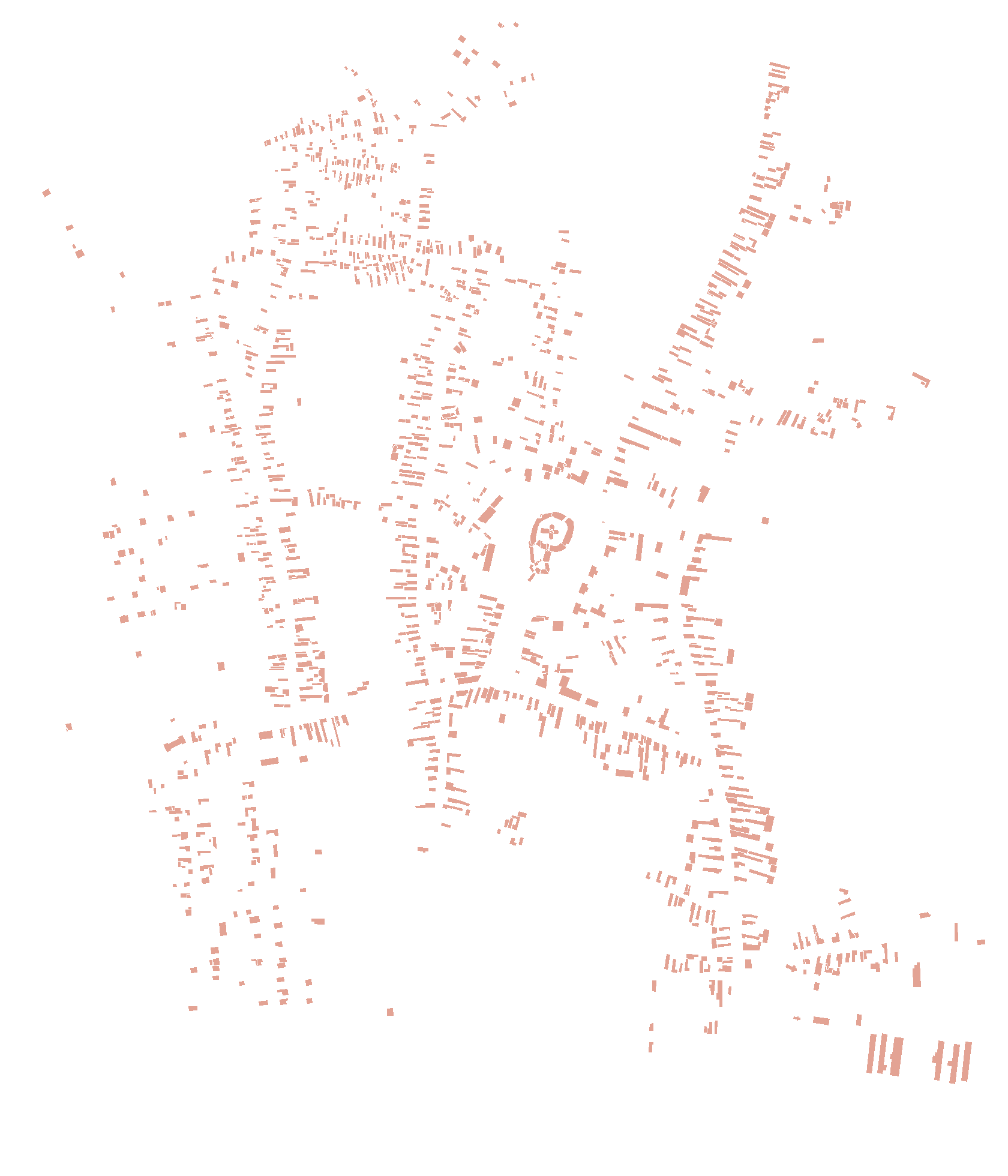
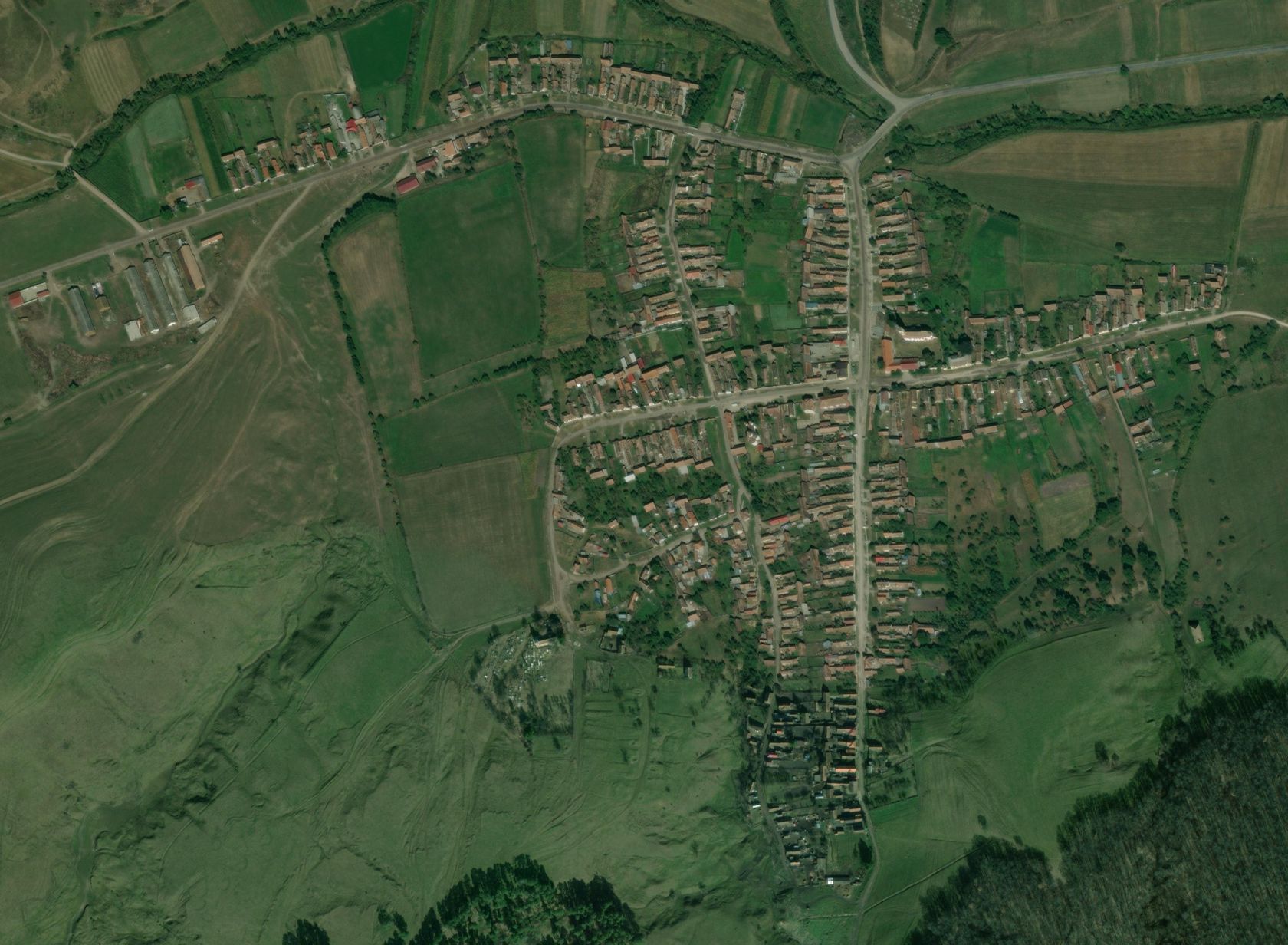
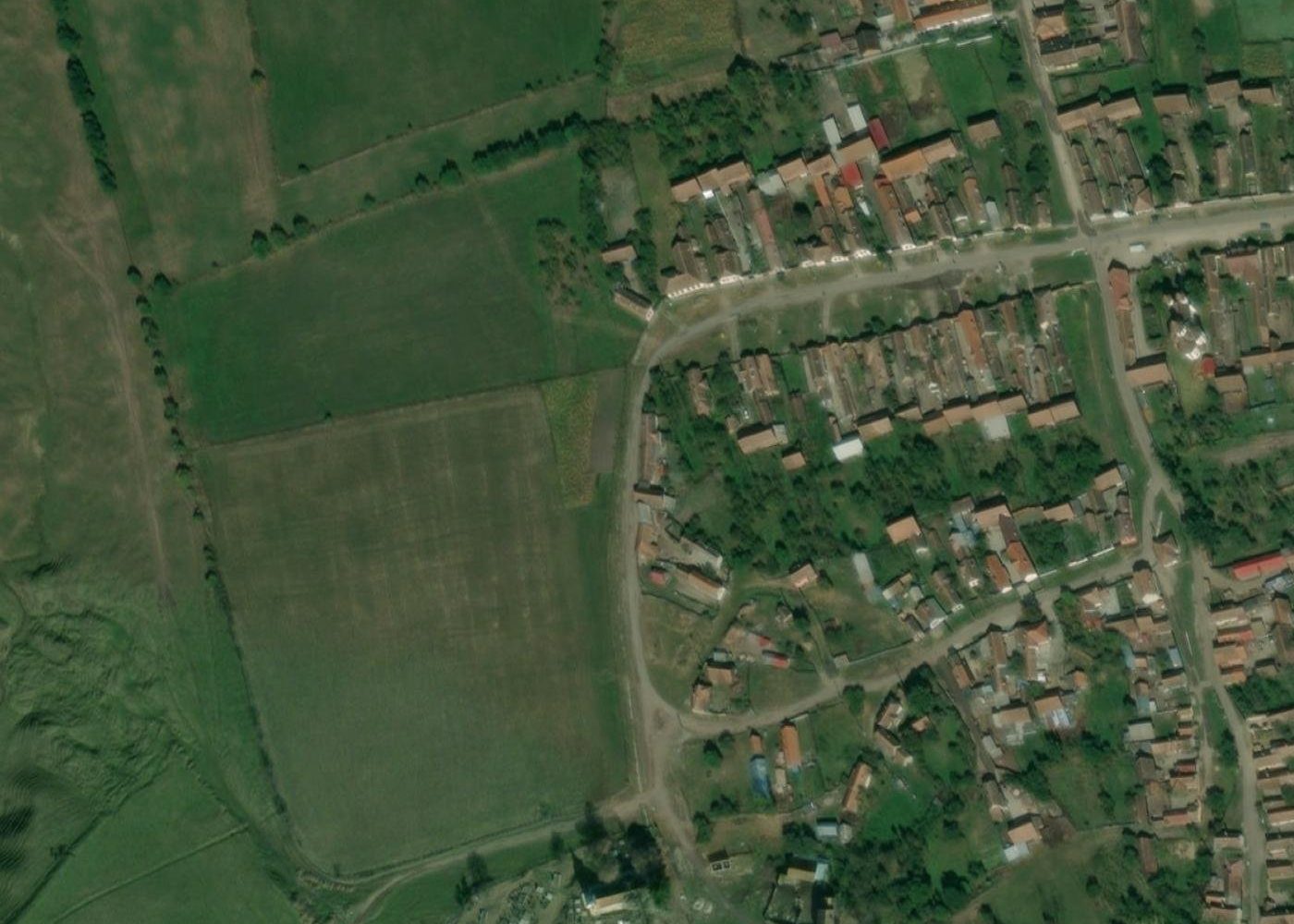
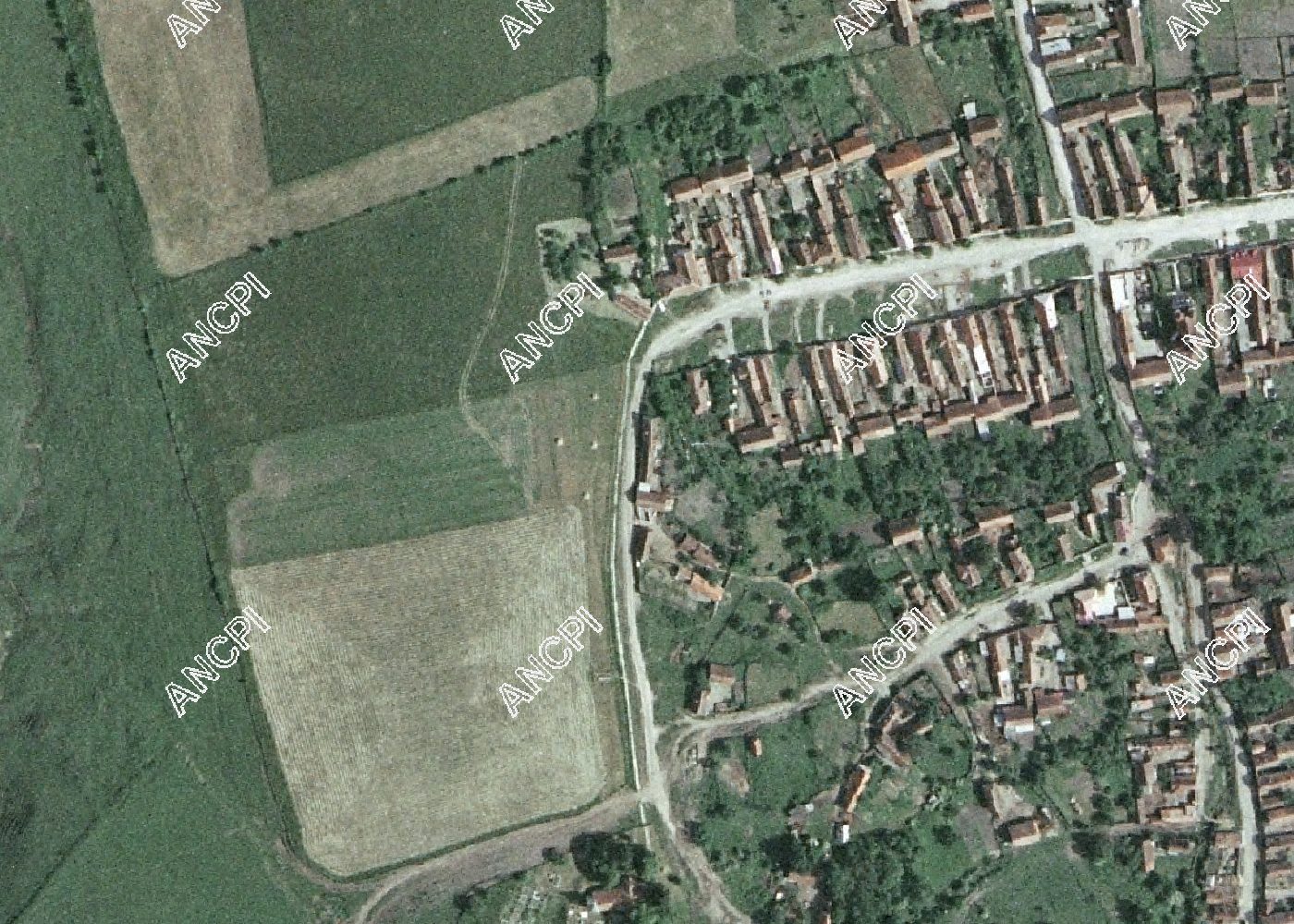
Dacia, 2005 → 2026
drag the handle · the same patch of village, twenty years apart
⟷
2005
today
ANCPI 2005 orthophoto (left of the handle) and current satellite imagery (right), aligned on the same grid. Sources: ANCPI, Esri.
Two ways to lose a village
each dot = one village · horizontal: 95% confidence interval for tile · vertical: from confirmed ruins up to the ceiling with uncertain cases
How we measured
For every village we extracted the footprints of all buildings (OpenStreetMap or Microsoft Building Footprints), realigned them on the satellite image, and human-judged a random sample of ~90 buildings: tile, another material, or no roof. The percentages carry 95% confidence intervals.
“Gone” is not a guess: every building reported as a ruin was checked against the ANCPI orthophotos of 2005, 2012 and 2016 — it exists in the archive, it no longer exists today. Phantom outlines from the automated datasets were removed from the calculation.
One acknowledged limit: in the peri-urban communes of the Brașov commuter belt, part of the tile we count is modern tile on new houses — there, the percentage measures the material, not the heritage.
Data and methodology: The Saxonalist project · July 2026. The tile percentages are human-validated for all 27 villages in the study, and the abandonment figures are arbitrated, village by village, against the 2005–2016 aerial archive; where the archive does not allow a verdict, the uncertainty is carried explicitly as an interval.
Next: all ~430 Saxon settlements
The study is expanding to the whole of Saxon Transylvania — every settlement, both erosions. Leave your e-mail and we will write to you once, when it is published.
Research begun and written at Viscri 9 — a guesthouse in the village with 97% tile.